

Plumbing Cost Estimator? Why It Matters (NYC, 2026 Guide)
You call a plumber because a pipe is leaking. You get a price and a sign. Later, you find out the job needed a permit, a vertical stack got nicked, and suddenly that small bill ballooned into a weekend of disruption and surprise costs.
Now imagine that same scenario on a multi-unit gut renovation in NYC. One wrong allowance, one missed DOB filing, and the entire job’s margin evaporates. That’s what happens when estimating is treated like guesswork.
An estimator is the person who estimates the plumbing cost. But that sentence hides many years of trade knowledge, lots of municipal forms, and a sixth sense about hidden conditions. A skilled plumbing cost estimator understands materials, labor classes, permit hurdles, and the way NYC buildings decide to surprise you. They’re the reason a job finishes on time and on budget.
This guide will teach you what a plumbing cost estimator does, why the job matters in NYC, how estimates are built, and how to spot a good estimator vs. a guess. If you’re a homeowner, property manager, GC, or engineer, this is the map you need.
What a Plumbing Cost Estimator Actually Does
An estimator estimates the plumbing cost. Let’s unpack that into what they actually do, day in, day out.
An estimator’s job is to create a realistic, defensible price for plumbing work before hammers swing. That means:
- Reading drawings and specifications (or creating takeoffs if drawings aren’t available).
- Counting fixtures, measuring pipe runs, and noting riser locations.
- Applying unit costs for materials and labor that reflect the local market
- Adding realistic allowances for permits, inspections, and DOB process costs.
- Accounting for access problems, occupied units, and any protected finishes.
- Building contingency language for unknowns, and calling out what’s excluded.
- Turning the whole thing into a clear line-item bid or quote, your client can reasonably accept.
An estimator is a technical reader, a local-market economist, and a savage risk manager. They’re the person who says “we can do this for X” with a straight face and then backs that number up when things go sideways.
Why Accurate Plumbing Estimating Matters?
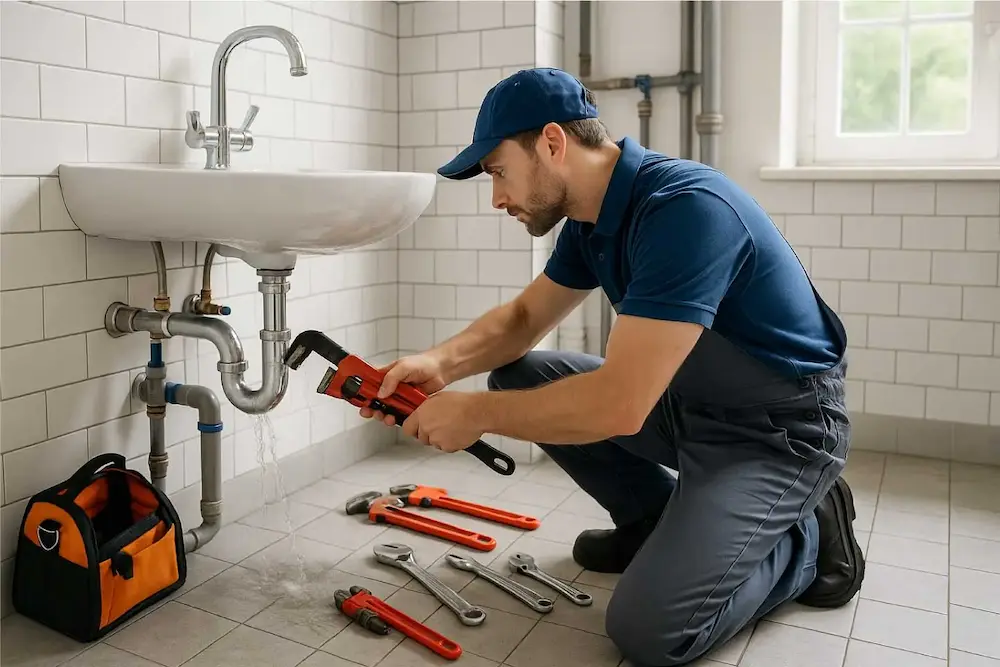
Bad estimates cause more than money problems. They cause sleepless nights, angry subcontractors, missed deadlines, and reputational damage.
-
For Homeowners
A bad estimate can turn a planned bathroom refresh into a month of contractors in your kitchen and a four-figure budget overrun. If your work isn’t permitted properly, you might face fines or trouble selling the unit later.
-
For Contractors & GCs
Wrong estimates eat margins. On multi-unit jobs, a small miscalculation per unit multiplies quickly. Underprice the plumbing schematic for a 40-unit rehab, and you’ll quickly eat your profit on rework and change orders.
-
For Developers & Owners
Estimate risk feeds financial risk. Lenders and underwriters want confidence in hard costs. A sloppy plumbing estimate undermines the whole project underwrite and can cost you in financing terms, delays, and change-order disputes.
-
For Property Managers
Repair budgets need to be realistic. Underestimate the cost for a slab leak repair, and you’ll be paying emergency rates and tenant relocation costs, all avoidable with better estimating.
The Anatomy of a Plumbing Estimate
A transparent plumbing estimate is readable. If you can’t follow the logic, it’s probably hiding an aggressive contingency (or worse, a mistake). Here’s the anatomy of an accurate estimate:
-
Project Description & Scope
Short, exact scope, including location, fixture count, linear feet, riser IDs, referenced drawing numbers (e.g., DWG A-201), restoration requirements and start/end dates. State demolition extent and finish restoration responsibility so unit pricing matches real work and avoids scope creep.
-
Line-Item Breakdown
List every material and labor unit:
| Item | Unit | Measurement / Description | Unit Rate |
| Fixtures | ea | Toilets, sinks, showers, tubs | $/ea |
| Pipe | lf | Supply and drain piping | $/lf |
| Fittings | qty | Elbows, tees, couplings | $/qty |
| Valves | ea | Shutoff and control valves | $/ea |
| Demolition | sf | Wall or slab removal | $/sf |
| Restoration | sf | Drywall, tile, finish repair | $/sf |
| Testing | job | Pressure testing (PSI, hours) | $/job |
| Labor | hr | Apprentice / Journeyman / LMP | $/hr |
| Long-Lead Items | ea | Fixtures or specialty valves | Lead time (weeks) |
Also Read: How Much it Cost to Build a 12×12 Shed?
-
Labor Hours & Rates
Labor in a plumbing estimate should never be a lump sum because experts assign tasks by labor class and rates due to variation in job nature or scope, like
- Apprentices support rough-in and material handling
- Journeymen perform installations and tie-ins
- Licensed Master Plumbers (LMPs) handle permitting, inspections, and code compliance.
And an estimator, you know, calculates labor as hours per fixture or per linear foot of piping, adjusting for access, building age, and system complexity.
| Labor Class | NYC Hourly Rate | Use in Estimate |
| Apprentice | $90–$130 per hour | Material handling, rough-in support |
| Journeyman | $140–$190 per hour | Fixture installation, pipe runs, tie-ins |
| Master / LMP | $180–$250 per hour | Permit filing, inspections, and final sign-off |
-
Equipment & Rentals
A trustworthy plumbing estimator always factors in the cost for equipment and machine rentals. This cost is added to the budget according to daily needs, per-job needs, or operator requirements. Mobilization and demobilization are also considered here. See the table for a better understanding!
| Equipment / Rental | NYC Rate | Notes / Scope |
| Hydro-jetter / Pump | $450–$1,200 per day | Includes operator hours and mobilization |
| Scaffold / Lift | $100–$400 per day | For access to elevated or hard-to-reach areas |
| CCTV Inspection | $300–$800 per job | Camera inspection of drains or sewer lines |
| Crane / Hoist | $600–$2,500 per day | Includes operator; used for heavy fixtures or rooftop access |
-
Permits & Inspections
A reliable plumbing cost estimator always accounts for required permits and inspections for the job. This includes
- City plumbing permits
- Licensed Master Plumber (LMP) filings
- Inspection allowances
- Mandatory system tests, like backflow or pressure testing.
Professional estimators also consider lead times, resubmission responsibilities, and potential correction costs to eliminate the chances of delays or unexpected charges.
| Permit / Inspection | NYC Cost | Notes |
| DOB Plumbing Permit | $200–$500 | Cost varies by project scope; required for most plumbing work |
| LMP Filing & Sign-off | $800–$2,500 | LMP’s responsibility includes permit submission and final approval |
| Inspection Allowances | $300–$1,000 | Covers city-required inspections and retesting if necessary |
| Mandatory Tests | $250–$1,000 | Backflow, water pressure, and DWV tests may require a city witness |
-
Access & Protection Allowances
Estimators include all costs to access the work site safely and protect existing finishes. This covers elevator reservations, hoisting equipment, surface protection, trash management, and staged material handling. These costs often affect labor productivity and overall project scheduling.
| Access / Protection Item | NYC Rate | Notes |
| Elevator Reservation | $150–$800 per day | Required for high-rise deliveries and hoisting |
| Hoisting / Crane | $600–$2,500 per day | Operator included, for heavy fixtures or rooftop access |
| Protection Boards (Plywood) | $2–$5 per sq ft | Protects floors and finished surfaces |
| Trash Chutes / Dumpster Permits | $150–$500 | Includes permit fees and labor for waste removal |
| Staged Material Handling | $100–$400 per day | Coordination of delivery, storage, and movement on-site |
-
Contingency & Exclusions
Set contingency 10–15% for renovations, and 5–10% for routine repairs. Explicitly exclude asbestos abatement, structural repairs, latent MEP defects, and code-remediation unless priced—state change-order triggers and re-quote thresholds to control mid-job surprises.
-
Payment Terms & Schedule
Expert estimators specify
- Deposit, which is commonly 10–30%
- Milestone invoicing: pre-demo, mid-project, and completion
- Retainage 5–10% if used
- Payment window (Net 15/30)
- Late fees.
They tie payments to inspected milestones where permits are required.
-
Assumptions
List operational assumptions, like
- Normal business hours (Mon–Fri 8 am–5 pm)
- Material price base date
- Available shutoffs
- Unobstructed access
- No unforeseen code violations.
Also, call out conditionals (e.g., if asbestos is present, additional scope) to avoid disputes.
-
Validity Period
State quote validity, typically 30–60 days, and tie rates to the quote date. Include material-price escalation, extended lead-time, and regulatory change clauses that trigger re-pricing after the validity window.
If any of those 10 items are missing, ask the estimator, because missing pieces lead to surprise bills.
Tools & Software That Plumbing Estimators Use
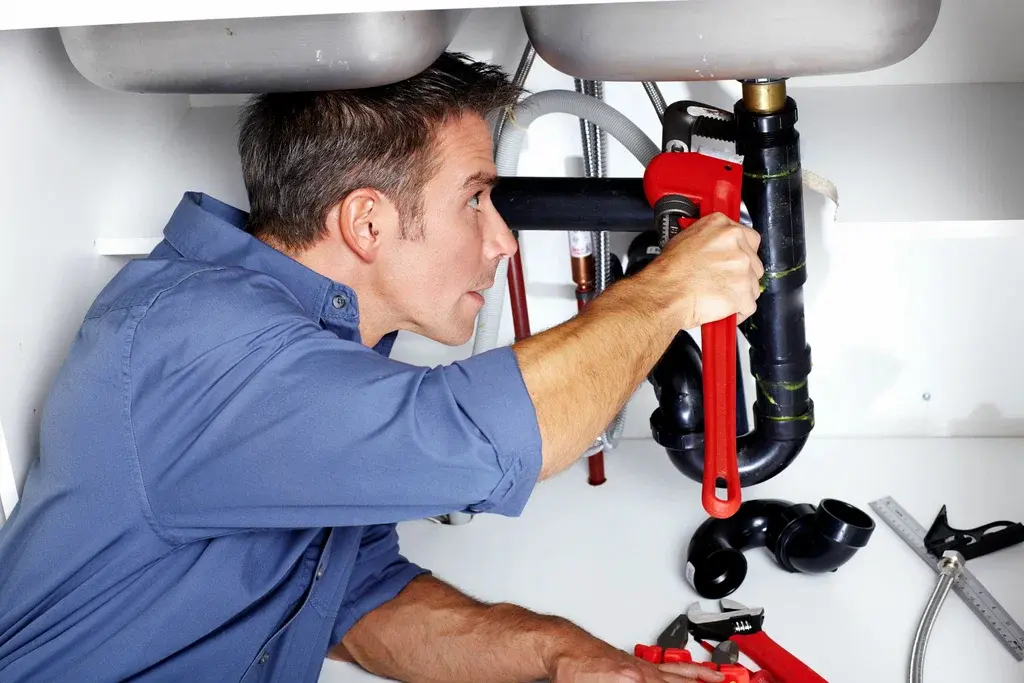
Estimators use a range of tools.
-
Manual Takeoffs
Manual takeoffs rely on tape measures, drawings, and field notes; estimators regularly use them for small jobs, tactile verification, and nuanced judgment, spotting hidden conditions that digital tools often miss on-site, too.
-
Digital Takeoff Software
Digital takeoff software extracts counts and linear measurements from PDFs or CAD instantly; estimators save time, reduce counting errors, create quantities, and feed accurate inputs into pricing and scheduling workflows.
-
Plumbing Estimating Platforms
Estimating platforms centralize takeoffs, pricing libraries, scheduling, and invoicing; estimators gain consistent margins, automated overhead allocation, job costing visibility, and analytics dashboards.
-
Photo-based AI Estimation
Photo-based AI estimators create fast ballpark quotes from images; estimators use them for screening leads, quick budgets, but verify onsite because hidden conditions and NYC code triggers demand manual review.
-
Local Pricing Databases
Local pricing databases provide borough-adjusted unit costs; estimators pull material and labor rates that reflect NYC market volatility, supplier lead times, and prevailing wage impacts for precise, defensible, accurate bids.
What To Look For in Your Plumbing Estimator?
If you’re reading this, you probably already know NYC is special. Let me list the things your estimator must account for.
-
Licensed Master Plumber filings (LMP)
In NYC, many plumbing permits must be pulled by a Licensed Master Plumber. That’s not paperwork overhead; it’s liability and time. An estimator who doesn’t price the LMP filing is making a rookie mistake.
-
DOB Inspections & Timing
An estimate must include time and cost for DOB processes, including filing, paperwork corrections, and re-inspections. That can add days and sometimes repeated trips.
-
Building Type & Vertical Complexity
Brownstones, pre-war walk-ups, and high-rise towers all behave differently. Vertical stacks, riser access, and lateral runs will change costs in predictable ways if your estimator knows what to look for.
-
Access Logistics & Parking
If you need a sidewalk permit, a delivery window, or a truck-mounted pump, that’s a line item. Local deliveries and parking alone can cost hundreds or thousands across a job.
-
Union Impact & Labor Market
Where union labor or prevailing wage rules apply, your estimator should know the wage floor and associated contributions. That raises bill rates and changes crew composition in the estimate.
-
Material Theft & Storage Risks
Copper theft is a real urban variable. Staging areas and secure storage can become necessary, and an estimator who fails to account for safe storage is leaving money on the table.
Also Read: How Much Does it Cost to Install Drywall
NYC Plumbing Cost Breakdown
Understanding plumbing costs in NYC isn’t just about the numbers — it’s about knowing why they land where they do. Labor intensity, building type, access, and permits all influence pricing. These ranges are benchmarks, not quotes. If a bid is far outside these, it’s worth asking for a detailed breakdown.
| Service / Scope | NYC Cost Range | Notes |
| Common Repairs | ||
| Leaky faucet repair | $175–$375 | Quick job normally; older valves increase labor time |
| Toilet repair (valve/seat/flapper) | $175–$450 | Replacement parts or difficult access raise the cost |
| Toilet replacement | $450–$1,100 | Includes removal, wax ring, and re-seating |
| Drain cleaning (snaking) | $225–$550 | Mainline vs branch lines, clog depth affects price |
| Hydro-jetting | $450–$1,200 | Heavy deposits or tree roots drive up costs |
| Garbage disposal replacement | $450–$900 | Kitchen access and countertop adjustments matter |
| Pipe leak repair (open wall) | $350–$900 | Demo & restoration labor are major factors |
| Pipe leak behind the wall/slab | $750–$2,000+ | Slab leaks need specialized diagnostics, more labor |
| Major Installations | ||
| Water heater (tank) | $1,800–$3,200 | Includes hookup, venting allowances |
| Tankless water heater | $3,500–$6,500 | Fuel type, venting complexity affect cost |
| Dishwasher hookup | $350–$850 | Supply and drain connection; cabinet access matters |
| Gas line short run | $700–$2,500 | Includes test, possible permits |
| Construction / New Build | ||
| Plumbing rough-in (per sq ft) | $8–$18 | Residential baseline, depends on access & design |
| Rough-in per apartment unit | $6,000–$15,000 | Fixture count, vertical complexity influence pricing |
| Full bathroom rough-in | $2,500–$6,000 | Waste, vent, hot & cold lines included |
| Vertical stack replacement | $4,000–$12,000 per line | Noisy, messy, complex, labor-intensive |
| Emergency / After-Hours | ||
| Emergency service call | $250–$500 | Initial call fee; urgency premium |
| After-hours hourly | $225–$400/hr | 1.5×–3× multiplier for weekends/holidays |
How does a Plumbing Estimator Calculate Project Cost?
- Gather Project Specific Documentation
- Conduct a Site Visit to Get Limitations & Access
- Perform a Takeoff to Get Material Quantification
- Apply Unit Pricing
- Add Permits and Compliance Fees
- Assess Risk & Add Contingency
- Produce the Personalized Quote
- Review Plumbing Estimates with the Client
At the end, a signed acknowledgement ensures both parties share the same understanding before work begins. This reduces potential disputes or misunderstandings between both parties.
Common Plumbing Estimating Mistakes & Solutions
If you read a dozen estimates, you’ll see the same mistakes repeated. Here’s what to watch for.
1. Using National Averages
National price books are fine as a starting point. But NYC needs borough-adjusted costs and allowances for access and DOB processes.
Fix: Use local historical costs and adjust for union presence and building age.
2. Ignoring Permit & Filing Costs
Contractors who don’t price LMP filings, permit fees, or reinspection costs are going to add them later as change orders.
Fix: Put permit allowances in the base estimate and outline the DOB process.
3. No Allowance for Hidden Conditions
Pre-war piping, asbestos, and prior hacks are common. No allowance equals surprises.
Fix: Use a 10–15% contingency for renovations and 5–10% for typical repairs.
4. Underestimating Labor Class Mix
Assuming only journeymen without apprentices or LMP sign-off hours misprices the labor burden.
Fix: Model hours by task and assign the correct labor class to each hour.
5. Poor Scope Description
Plumbing work is an invitation to cost disputes. So be specific.
Fix: Write scope like a recipe. If a wall needs to be opened, say how much and who will restore the finishes.
What to Ask Your Estimator When Reviewing the Quote
If you get a quote and it’s not clear, ask:
- What exactly is excluded?
- Who’s responsible for the LMP filing?
- Does this price include inspections and re-inspection fees?
- What’s the contingency for hidden conditions?
- What are the payment terms and schedule?
- If the work uncovers X (e.g., bad stack), what is your stop-work and re-quote policy?
How a Professional Plumbing Estimator Presents Estimates
Understand this with a story! Imagine Sarah, a mom in New York City, discovers her kitchen faucet is dripping. It keeps her awake at night. She calls a plumbing company, and today, the plumber’s estimator is coming to give her a price.
Also Read: Average Cost to Paint the Interior of a House in NYC
The estimator isn’t just there to say, “It’ll cost $400.” He’s there to help Sarah understand what she’s paying for.
Step 1: Use Simple Language
The estimator writes everything in plain language. He lists each part and task: “Replace kitchen faucet, shutoff valve, and 8 feet of supply line.” Not just “plumbing work.” Sarah can read it and understand what she’s paying for. When people see exactly what’s included, they feel safe and confident.
Step 2: Explain the Risks
The estimator also tells Sarah about possible surprises. Old pipes might be corroded or hidden behind walls. To be safe, he adds a small extra amount called a contingency, 10–15%, in case something unexpected comes up. Sarah knows she won’t get shocked by a huge bill later.
Step 3: Show Options
Next, the estimator gives Sarah three choices:
- Option A (Basic): Standard faucet and pipes. It works fine and costs less.
- Option B (Durable): Better materials that last longer. A bit more money.
- Option C (Premium): Top-quality faucet and extra protection. Costs more but gives peace of mind.
Sarah can pick the one she likes best, and that fits her budget. She feels like she got it!
Step 4: Set Expectations
Some jobs are easy, some are tricky. The estimator uses confidence levels: high, medium, or low.
- High: Simple repair, like the dripping faucet, very predictable.
- Medium: Installing a water heater; it depends on the venting and space.
- Low: A full kitchen renovation or fixing pipes under concrete. Here, many surprises are possible.
Sarah now knows what could go smoothly and what might take extra time or money.
Step 5: Build Trust
By now, Sarah trusts the estimator. She can see every part, every cost, and every risk. She signs the estimate because she understands it all, not because she’s pressured.
The estimator’s skill isn’t just in math; it’s in making people feel safe and informed. Clear estimates turn nervous homeowners into happy customers. However, unclear estimates confuse people, scare them, and often lead to them losing their jobs.
Frequently Asked Questions
Is a plumbing estimator the same as a plumber?
Not exactly. Some master plumbers are estimators, but the estimator’s role is pricing and risk analysis. They may not perform the plumbing work. In many firms, estimators are dedicated professionals who team with project managers and accounting.
How much does an estimator charge?
For a simple repair, the cost of an estimator is often rolled into the job. For large construction bids, independent estimating services charge flat fees or a percentage of the project budget. On big jobs, paying for a quality estimate is cheaper than losing a bid or blowing margins.
Can software replace plumbing estimators?
Not fully. Software speeds up counting and applies databases, but it can’t judge hidden conditions or NYC-specific permit pitfalls. The best results come from software plus a seasoned local plumbing estimator.
How do I verify an estimator’s local knowledge?
Ask for recent NYC projects they priced, ask how they handled DOB processes, and have them walk you through a sample line item. Local experience should be obvious.
Conclusion
You came here for clarity. Here it is: In New York City, where regulations, logistics, and building quirks create risk, a skilled plumbing cost estimator translates uncertainty into a number you can use to plan expenses and negotiate.
Estimating isn’t a single skill. It’s a composite of technical reading, local-market intelligence, permit knowledge, and risk management. A professional estimator helps you save time and money. However, an inexperienced one costs more than the price tag suggests.
If you’re building or renovating pipes in NYC, insist on a clear, line-item estimate that includes permits, LMP filings, and contingency language. If an estimator can’t explain their assumptions, don’t hire them. It’s that simple.
Hire a Plumbing Cost Estimator that Actually Helps You Stand Up!
If you want a bid that’s rooted in NYC reality, and not a guess, we can help. At NYC Esimating, we provide DOB-ready, line-item plumbing estimates and takeoffs for contractors, developers, and property owners. Our team factors borough multipliers, LMP filings, and access logistics into every quote. Tell us what you need!
- Quick Ballpark: Photo-based estimate within 48 hours. It is good for early budgeting.
- Bid-Ready Estimate: Full takeoff, line-item pricing, and DOB allowances, which is ideal for GCs and developers.
- Ongoing Estimating Retainer: Monthly estimate packages for contractors running multiple bids.
Contact our team now!


